

If you want to know how to run a sports academy at a high level, Sydney from Champ Season just ran the experiment for you. He’s 26 years old. He started his basketball academy in Almaty, Kazakhstan with no athletes, no locked-in facility, and a first camp that had 2 kids signed up two weeks before the start date. A year later, Champ Season has 150 athletes, a second location in the capital city, and a waitlist.
The model isn’t complicated. Put people before the program. Build relationships like they’re the actual asset, because they are. Hold the line on quality even when it costs you money you don’t have yet.
Here’s what this episode covers.
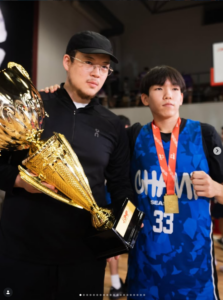
Who is Sydney from Champ Season?
Sydney is the founder of Champ Season, a basketball academy based in Almaty, Kazakhstan. He’s a former player who grew up watching US coaches on YouTube and learned English specifically to absorb their coaching content. At 18, he recorded a video where he stated his goal: build the best basketball academy in Kazakhstan. At 26, he’s executing it.
Champ Season launched just over a year ago. It now has 150 athletes, operates out of a partnership with QSI, an American school in Almaty, and runs competitive teams that have traveled internationally. Sydney is also actively bringing top US skill development coaches to Kazakhstan, with a long-term goal of developing the first Kazakh-born NBA player.
Mitchell Kirsch visited Champ Season in person before this recording. His takeaway: it’s one of the fastest-growing, most sustainable academies he’s come across, anywhere in the world.
How to run a sports academy: start with quality before you can afford it
Champ Season’s first camp was with Josh Venn, a high-level US skill development coach. Two weeks before the camp, they had 2 kids registered. Sydney went into debt to run it anyway.
> “I lost a lot of money and I didn’t have a lot of money. But I said, let’s do this. You need to set a very high, big goal.”
Instead of starting small and building quality later, he inverted it. Bring in the best coaching first. Let the work speak. Trust the word of mouth to follow.
He went to tournaments and sold tickets in person. He built relationships. The QSI school partnership came together in the weeks after that first camp. Each time a parent watched their kid work with a world-class coach in a serious environment, that parent became a recruiter for the next cohort.
This is something most coaches get wrong when they think about how to run a sports academy. They hold quality back until the business can afford it. Sydney spent before he could afford it and let the quality do the marketing.
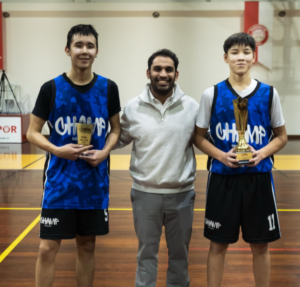
Why the facility partnership is the whole foundation
Most coaches treat facility access as a transaction: pay the rental fee, get the court time. Sydney treats it as a relationship that needs tending every day.
Champ Season operates out of QSI, an American school in Almaty with strong facilities and an aligned culture. The partnership holds because Sydney leads with what he can offer, not what he needs. He gives discounts to kids already enrolled in the school. He helps run PE classes. When the school has a problem that has nothing to do with basketball, he treats it as his problem. He goes to dinner with the QSI leadership. When 8 athletes miss 8 days of class for a tournament trip to Spain, the school supports it, because they believe in what Champ Season is building.
> “First you think about your partner, then about us. Details matter. If you hear your partner has a problem, it’s not only his problem. It’s already my problem because he said it to me.”
Today the athlete mix is 30% QSI-enrolled kids and 70% from outside. The outside numbers keep growing. But Sydney still puts the school relationship first because without that partnership, the whole operation has no foundation.
Coaches building a basketball training business consistently underestimate this. Getting facility access is a transaction. Keeping it and growing it is a different skill. A partner who goes to bat for you when it matters is built over months, one small decision at a time.
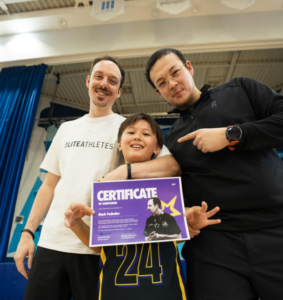
What does it actually take to run a sports academy every day?
Two hours with one parent. That’s a real number from Sydney’s week. Someone came in frustrated, and he sat with them until they left saying thank you. That’s not a distraction from running the academy. That is running the academy.
At 150 athletes, you’re responsible for 300 parents who had options and chose you. Every one of them made that decision based on trust. Keeping it means being reachable, owning problems fast, and doing the unglamorous relationship work most coaches skip because it doesn’t feel like coaching.
The operational load compounds at that scale too. Managing sessions across two cities, tracking athletes, collecting payments from hundreds of families, and keeping coaches coordinated requires real infrastructure. An athlete management system handles the admin load so your coaching staff stays on the court instead of chasing down spreadsheets and unanswered texts.
Sydney puts it plainly: you need to be responsible for the people you said yes to. There’s no backup. Every kid in Champ Season is counting on the commitment you made to them.
How to expand to a second location without breaking the first
Champ Season’s second location in Astana, the capital city, was deliberate and slow. Sydney spent three and a half weeks there before opening, building the staff and the relationships that would keep it running when he flew back to Almaty.
He’s already turned down offers to open in other cities in Kazakhstan. The reasoning is direct:
> “Expanding is a very risky part. You have one academy doing really good, and you want to open in every city. It will not work that way.”
His framework: make the first location solid before building the second. Make the second solid before looking at a third. Expanding without operational depth just scales the chaos.
Running two cities also means your session booking system has to work without you watching it. The infrastructure requirements for a two-location academy are genuinely different from a single gym. That’s worth solving before you sign the second lease, not after.
The bottom line
The fastest-growing academy in the room usually belongs to the coach who leads with value before the business can afford it. Sydney built 150 athletes in one year by going into debt on quality, treating every parent conversation as an investment, and making his facility partner’s problems his own.
For a detailed breakdown of what it costs to actually open and operate the physical space, basketball training facility costs covers the real numbers.
If you’re ready to run your academy on a system that can handle 150 athletes without the admin chaos, book a free CoachIQ demo and see how it works for your business.
Full transcript
Show full transcript
Opening and introductions
Mitchell Kirsch (00:02.323)
Yo yo!
Sydney (00:02.376)
sorry for sorry it’s okay or no I could change it to other side if you want I change to this side
Mitchell Kirsch (00:12.642)
No, I like the bookcase you got. That was good. The first one. I think the lighting is better.
Sydney (00:16.318)
Look, I’m smart guy, not only basketball.
Mitchell Kirsch (00:21.006)
You got the glasses on? How are you?
Sydney (00:26.43)
I’m good, good. Thank you. What about you? Sorry again for that. I was in crazy rush today because I was in the capital city before we opened our academy in capital city. went to… Good, came. I spent three and a half weeks. Came to Almaty and we’re going to Spain today. So it’s only one, two days in Almaty and a lot of meetings, you know.
Mitchell Kirsch (00:31.469)
No worries.
Mitchell Kirsch (00:41.112)
How’s it going?
Mitchell Kirsch (00:54.774)
Isn’t it like 10 30 PM where you are?
Sydney (00:57.659)
Yes, yes.
Mitchell Kirsch (00:59.33)
When are you going to Spain?
Sydney (01:04.61)
Tonight, 2 AM.
Mitchell Kirsch (01:04.792)
But like, what time? You leave tonight or tomorrow?
Sydney (01:12.446)
Okay.
Mitchell Kirsch (01:14.178)
That’s crazy. That’s crazy. All right. I want to just dot. Let’s, let’s just jump into the podcast. Cause I think all this stuff is, is valuable. the team, the team will edit it up. they’ll put together clips and send them also, or like tag you guys to collaborate. so, yeah, but, but the rest of the team does, I don’t really have control over what type of stuff they do.
Sydney (01:23.314)
Yes, yes. Let’s go.
Sydney (01:33.832)
Great.
Mitchell Kirsch (01:40.748)
I want to touch on a lot of the business stuff today because I think that’s super cool. quick, how many people are in the Academy now that you guys opened up second spot?
Sydney (01:49.15)
We now have 150 kids in our academy. Yes, 150 kids.
Mitchell Kirsch (01:53.422)
150.
All right. Hell yeah. That’s really cool. All right. So I’m just going to jump in. I’ll give a quick intro to you and then I’m just going to start with a question and it’ll be like a 30 minute conversation.
Sydney (02:00.423)
Okay.
Sydney (02:05.362)
Great, let’s go.
Sydney’s vision for Champ Season
Mitchell Kirsch (02:07.694)
Sweet. All right, I’ll do like a little bit of a typical podcast intro, but whatever.
Sydney (02:13.241)
Thank you.
Mitchell Kirsch (02:16.01)
Welcome back to the podcast. I’m your host Mitchell Kirsch and we are here with Sydney from champ season in Kazakhstan. This is a special episode for me because Sydney was gracious enough to have me out to his Academy in Almaty Kazakhstan and I feel like I learned so much culturally but also how to build a business with humans at the center.
Sydney is an incredible human being and an incredible businessman who has blown up his business in just over a year now. So we’re going to learn a lot today. I’m going to dive right into it. Sydney, can you explain to me before you started, what was the vision for champ season?
Sydney (03:02.142)
First of all, thank you so much, Mitchell. It was a for me to talk to you and especially host you in Kazakhstan. You are incredible man too and I want to be helpful for everyone who listens to this. First of all, I was a basketball player myself and I used to watch coaches like you, know, like top tier coaches in the States and it was…
Every practice was in Russian and Kazakh language, you know. And I started to learn English and I know that it’s my vision. I had a video when I was 18, I wanted to build an academy, basketball. Right now I’m 26 and my dream is happening. So I just wanted to build the best academy in my country to develop and produce the best basketball players.
Where basketball stands in Kazakhstan
Mitchell Kirsch (03:59.607)
And for people that don’t know, where does basketball rank in Kazakhstan as far as popularity within sport?
Sydney (04:09.429)
Basketball is right now becoming more popular in Kazakhstan. But in Kazakhstan, mostly it’s wrestling, boxing, soccer. Basketball is not that popular. But right now we are on a race with basketball. for us it’s really hard to compete with wrestling and boxing. Because all the parents want their kids to wrestle, even girls also.
Building to 150 athletes in one year
Mitchell Kirsch (04:35.438)
Yes, but you are doing an amazing job building that basketball scene to give a little bit of perspective. Just over a year now, you started champ season and have grown to over 150 players in the academy. You have expanded to two cities in Kazakhstan. And on top of that, you’re working with many of the best players in the entire country. You are providing skill development, weight room work.
competitive teams, you’ve done so much. How have you been able to do this in such a short amount of time?
Sydney (05:13.822)
First of all I want to big shout out to my team, it’s not only me. We have incredible partners with QSI school in Almaty, it’s American school which based in Kazakhstan and it was incredible partnership for us and overall I think why it’s best players want to be with us is because we’re providing the best conditions and best environment for them.
So most important for me is our players will not be champions. Most important is they will develop. And it’s really hard to, from good to great, you know, we have good players and to make them great, it’s really hard. And this is why I want to invite as much as possible coaches like you to get this experience, to give our kids and players opportunity to be great.
Mitchell Kirsch (06:11.266)
Yeah, that was apparent to me was you took so much care into the facilities and bringing on the right people. You talk about partnering with the right things. it’s people, facilities, getting those high quality players to set the foundation.
Sydney (06:23.336)
Yes.
The decision to lead with quality from day one
Mitchell Kirsch (06:31.17)
Where did that decision come from? Because with a little bit of backstory, like a lot of people will get together their academy or training business in kind of the opposite way of instead of focusing on high, high quality first that will come once the business is up and running. But you kind of took a different approach to that. And from day one, you know, you were bringing in some of the top coaches in the U S all the way to Kazakhstan. So talk me through that decision and what did you risk in the process of building?
Sydney (06:46.813)
Yes.
Mitchell Kirsch (07:00.792)
champ season.
The first camp, two kids, and going into debt
Sydney (07:02.184)
Yes, we did our first camp with Josh Venn and it was an unbelievable experience for us. But financially, it was, I lost a lot of money and I didn’t have a lot of money. I get adept and to everybody who’s starting Academy or working on some things, I just want to say that it doesn’t matter in which condition you are or what you’re doing. You need to set a very high big goal.
And when we are searching for coaches, it’s we first who bring this type of coaches to Kazakhstan. And I just said, let’s do this. And the last two weeks before camp, we only had two kids. I like, okay, well, at least we will have a conversation with Josh for one week. It will be great. overall, and then I start to, you you always need to think about.
not a problem, but about solution about the problem. And I start, okay, why we don’t have kids? Because we don’t have a lot of like trust from parents. And how they will trust? They will not trust first, I think from social media, they will trust by people. We don’t need to forget about it. We working with kids first, we working with humans, we working with parents, with relatives of the kids too. So it’s very important. So they will know where they go and what they’re doing.
So I started to sell myself, I went to some tournaments, I started to sell tickets to camp, so this, this. And then it’s like, I could say right now it’s like a miracle what happened, I found the partners, they just signed a kit to camp and then we started to talk about, and I said this is my dream to build an academy, this, they’re like let’s do this together and we signed a contract with QSI. But besides this, it’s a lot of things like,
relationships yes when you’re building relationships it’s first you need to think about how you could be efficient for your partner yes you don’t need to think about only yourself and like what you could bring to at least like doesn’t matter this facility or to your city to your area how it could impact this yes and i had a big goal for example to raise the first Kazakh who play in NBA
Sydney (09:26.588)
Maybe for someone it’s crazy dream. But I know everything is possible with right people, with right mindset. It’s just everyday worth. That’s all.
Why relationships beat marketing
Mitchell Kirsch (09:38.576)
Absolutely. Now you talk about the people first aspect to these partnerships. What is really important for me after being in Kazakhstan with you guys is sharing the story of how welcoming and appreciative the entire country felt to me when I was there and how proud you guys are of the people and the country itself. I think coming from
the U S or from an outside view, Kazakhstan is, very misrepresented. And one thing that I think is incredibly true for you guys and something you take a lot of pride in is, the hospitality piece and making sure that people feel welcome.
How has that been a pillar for building your business? By providing these services, like you said, you’re dealing with the kids, the players, the parents, the partners. How do you view the role of hospitality in business?
Hospitality as a core business principle
Sydney (10:38.974)
I think it’s a crucial part of any business. But we are called social business because you work with kids and you could affect their lives. And it’s very important to not focus like only on raising the best basketball players. We also have a goal to not, because you know that only like zero zero zero.
Some percent will play professionally, yes. But what you could left with these kids, yes. So I believe that basketball could bring a lot of things, yes, to life, such as discipline, character, decision-making, yes. It’s like a lot of things at basketball and then it’s life for kids will be easier, yes. And about hospitality, it’s like, you it’s you came from states, yes, to us. We are very happy to welcome you.
But same it will be for example if someone from outside will come my people yes and he will need help I will provide him help it’s just in part of us as you said that we’re proud to be Kazakh yes I’m very proud and this is my goal to like make Kazakhstan number one in basketball for example in this area set a goal but same I think with any other academies
Even if you sit in the States, you need to be first in your area, for example, to bring top coaching style. Not everybody in Kazakhstan likes hospital and everything, but we truly cherish this. When someone brings us help, it’s just a great environment. Why not?
I want to keep become and parents become like not to basketball card in like to family
Building a family, not just a roster
Mitchell Kirsch (12:44.505)
And you can feel that it was very clear to me that everybody in champ season, it was not a basketball academy. was family. And that extended far beyond the court. Even when I was there and when there was some time in between sessions, they were inviting me over to their house, cooking meals. It was about much more than what was happening on the court. Now I want to dig into
more of the strategic partnership between champ season and QSI, which for those of you out there that don’t know QSI is a in American school. They’ve got great facilities and that is where Sydney runs champ season. So they developed a partnership and you talked a bit about how you can provide value first and focusing on that. I would love to just.
Sydney (13:16.434)
Mm-hmm.
How the QSI school partnership came together
Mitchell Kirsch (13:36.846)
Give us the backstory on how this partnership has developed and how you’ve continued to foster it. Because I think it’s so important for any business that wants stable growth to have a stable partner like this in a facility. And it’s one of the points that I see coaches struggle with the most. So how did you go about that partnership and how has it been so successful for you guys?
Sydney (13:59.614)
Yes, it’s like a crucial part for every academy is its facility. Yes, but and As I said, you need to think about not only yourself and about that me for example We could build if you want to build academies and you talking about the schools. Yes Like you need to think about Every case is different. Yes And like you need to think about how if you will become you will be in this facility
For example, what you give to this school, yes? For example, you could give discount for kids who is already in school, yes? Or you could take some kids for free, for example. Or school has a PE classes, yes? You could take care of these classes, for example, to help them. Something like this, you don’t, first you think about your partner, yes? Even with, right now with CHEMCES, we have a lot of kids and it’s like…
ratio I think 30 % from school and 70 % outside and it’s become more outside kids to join champ season but I still more focus on the school or it’s everything we’re doing we just first think about our partner then about us and then it’s very important because and I’m really glad with QSI because we have a really positive conversations always
Like you need to, for example, something, some things will happen. You will struggle with some things. Yes. You just don’t hesitate to ask questions. Yes. You like you start to ask the questions. Yes. Yes. And you together start to think and you have one good solution, which is good for everybody. So, and it’s just a perspective partner. Yes. And when you work in and, and you know, it’s not like even for example,
QSI is my apartment in basketball, yes. But I help them with a lot of different things, not beside basketball, yes. We’re going to dinner sometimes. When they have problems, I’m trying to help them with this. And like in the both way, know, I have some problems. They help me with some kids who’s in QSI. For example, we’re going today to Spain and some kids will miss school for eight days. And…
What makes a facility partnership actually last
Sydney (16:24.296)
helping with this they believe in what we are doing. They believe that it will help kids to grow, it will help also to school to grow. And it’s why they believe because we build these relationships, yes, every day. Like I think details matter, yes, like small details. For example, you hear that your partner has a problem, I think it’s not only his problem, it’s already become my problem because he said that to me.
And my goal is to think about how it’s helped. If you can help, just come and support, know, it’s like… It’s just small things, but they matters.
Why putting partners first counterintuitively drives growth
Mitchell Kirsch (17:07.118)
Yeah. It seems almost counterintuitive to the growth of a business to think about the others first, as opposed to what you’re doing, where you want to get to. But I think it’s a cool realization to now look at your business. And out of all the businesses that I come across in the basketball space and the Academy space, I would say yours has grown the fastest and has grown in the most sustainable way.
which I think can be a really valuable lesson for all the coaches out there. think you see a lot of coaches, especially in the U S ecosystem that are go getters and we’ll go hit their training. They’ll reach out to players. They’ll reach out to parents, but it’s a lot of times about the coach or the trainer’s business, not the value that they’re providing. And I think you’ve committed so much to the value aspect that
Sydney (17:59.112)
Yes.
Mitchell Kirsch (18:05.09)
You keep these people for so long. And the funny part is more and more people want to come to your business because the word of mouth grows really quickly. So it’s, it’s a. An investment on the front end, but it definitely contributes to the back ends of growing that business. And, one clear example is like you’ve now grown to a second city completely. So in looking at scaling businesses.
Sydney (18:21.438)
100%.
The decision to open in Astana
Mitchell Kirsch (18:34.798)
What was the decision to move to the capital city as a, as an expansion location? Why did you guys do that?
Sydney (18:43.622)
Yes, you know and before I will tell I will say to everybody that Expending also it’s a very risky part, you know, because for example you have one Academy it’s doing really good and You want it to be like, okay I will open every city Academy and I will be the best but it will not work that way, you know why we we had a Ice when we have a roadmap for champ season
and it was like I set the goal we need to open at least two or three academies in Kazakhstan but for me right now I think it’s I don’t want to open more in Kazakhstan especially and why is capital city because it’s far away from Almaty and it’s opportunity for this part also to come to Champions season and it’s just for me when we will have two cities
It’s very important, especially Almaty is the biggest city in Kazakhstan. Astana is the capital city. Yes. And when I went to Astana last three weeks with coach Yurik, we opened an academy and it’s very important because I can’t, I run off, see that I need to be in Almaty and I need to be in Astana. It’s very hard for me right now, but I’m thinking about that it’s just to give proper.
coaching to kids, this is most important. And I know in Astana they’re little bit struggling, they have pretty solid academies, but they have also really good players, which I could see that they need proper coaching and they will be some great players. you know, it’s about, but still, remember we talk about the part that relationships, yes. For example, today I spent also two hours talking with one parent.
It’s crazy, some will say like, why are you doing this and everything, but why I speak for two hours? Then in the end, they first they was angry, then in the end of the conversation, they say thank you to me and they understand everything. And you need to invest in this. It’s like I tell this investment because like opportunity costs I put it towards some different things, but it’s very important with every parent to work. And this is why I tell you this expanding.
How to expand without losing what you built
Sydney (21:11.386)
Sometimes it’s not good and but only one way you could expand is with right people So I’m very happy with Almaty because when I was outside for three weeks I didn’t like other crazy cause all this what I need to do was this it’s like working but takes time is to build this we’ll build this and then we move to Astana to build Academy same will be with maybe different city in the west of Kazakhstan, but
For now, I don’t see that. Already we have an opportunity to open in other cities, but I’m not doing this because we need to set solid, sustainable academy in Astana and then we could expand. But I think it will also take us one or two years to build like in the…
That’s it.
Mitchell Kirsch (22:07.342)
Yeah. So from the outside perspective, it, looks like you’re going super quickly. And truthfully, I think, I think you are, but you’re doing it in a way that is sustainable, right? You’re making sure you’re doing it right in the first place before moving to the second. And you’re going to stick with the second place and make sure that gets to the level that you want it to get to before looking to expand on any, any other directions. Now, if we zoom in to the daily life, this is something I had the privilege to see.
Sydney, you work all the time. And so it’s not as surprising when you get to see how passionate you are and how many hours you put into building the business. Now, I’m not sure that you would define it as work because it seems like you do it with a smile on your face the entire time. But if you can walk us through a day in the life to give some perspective on what it really takes to build a business.
What a day in the life actually looks like
Sydney (22:56.542)
Absolutely.
Mitchell Kirsch (23:07.139)
of this magnitude.
Sydney (23:09.342)
It’s a first you mentioned the right thing that it’s it’s all the coaches all the Academy’s owners they need to think about that. It’s really privileged that we have that we love basketball that we working in basketball and that it’s bring us opportunities to feed our families to yourself and grow business because I have a lot of friends which working
any other stuff and they’re making a lot of money like from but I see that they’re not super happy with this because they’re not belong to themselves and they’re working with some things and for them it’s right now become a little bit boring example but in basketball you know it’s all everyday drama everyday drama you work and you need to think about all the things and for some things we don’t cherish these things yes but try to work different places
sit in office and do some things like you will not able to do this for one day. For some people maybe could say I’m working every day, I don’t have any days off and it’s why? Because I love it. Yes, first of all, it’s come from love. to everybody it’s like if you don’t love this, I think you don’t need to do this.
Because you need to be really in love with the process. You need to really love it and you need to spend a lot of time on this. You need to be ready to spend a lot of time on this. If you don’t love it, I think in three, four months, it’s like you will just crash out. I remember Coach Jorick, when he first came to us last year, we opened an academy, and he said to me, Sidney, you know can’t do this every day like this.
I said no, I will do this. He said no one day you will like like no I’m quit with basketball. I quit with this and I said to him to you no I will not do this because I was committed to this and imagine that you have all you have you responsible for a lot of kids for example have 150 kids it’s 300 parents yes which we said to them something and I’m responsible for this and I need to take care of this I don’t have a backup you know
Responsibility as fuel, not burden
Sydney (25:36.318)
Today I will not do this. No, can’t do this because you’re responsible same as you Mitchell I think you were very this is like very responsible and when we work with you, I saw like you and I’m building the worker and how you deep-dive to All the details when we talk to you about this and I’m really happy to Listen from you to learn from you. It’s like, you know, I’m not saying that I’m good like this and learn from users
I said that all the coaches, all the people need to be like wake up and today like I don’t know nothing, yes. with this type of mentality, you I think you need to kill a little bit of your ego because you’re not the number one. Even if you’re number one, you still have things to do. You have, like, I think,
Sydney (26:34.482)
a lot of things which we can discover for example, soon we will do wrestling with our academy. I’m wrestling myself right now and I went to wrestling and I think it will be really important for our kids. I just had a talk with the coaches of Kazakhstan national team wrestling and they like explaining me about this part and I thinking about what missing our basketball players is like and I saw the same kids age.
wrestling and they all know brave they were like super relaxed and they crazy and I think if our players will do wrestling they will do the same thing and we’re talking about this you know it’s all day I’m thinking about opportunities which could come to champ season it’s a it’s not hard it’s as I said because I love it so coach Eric I’m not cross out
Always being a beginner at any level
Mitchell Kirsch (27:28.913)
Yeah, so shout out to Yurik. Yeah. Some people are just built differently. And I think when, when you come from a place of love, like you said, there, there’s another level of energy that is, is access. And you touched on a few things that I would like to really bring out. You touched on the love. You touched on responsibility, your responsibility for what you’re bringing to these kids, to their families, to the country.
You touched on always being a beginner and this is a mindset that I’ve seen at all levels, probably be one of the biggest and most important mindsets to long-term development. When I think of the two guys that I work with that are playing at the highest level, Duncan Robinson and George and the Yang, I would say they’re two of the most coachable people that I’ve come across and they’re doing it at the highest level and they’ve shot the ball at incredible rates throughout their career.
they are most willing to take feedback on their jump shot, which is in another interesting concept of this idea of always being a beginner, going from that place of love, having responsibility to improve and all these qualities that we’re really trying to instill in our players, it’s the same principles for building a business. I’ve got two questions left for you, Sydney, and I…
Sydney (28:34.29)
is.
Mitchell Kirsch (28:57.605)
hope that everybody listening to this podcast has gotten the sense for how much Sydney is a doer, meaning he has something he wants to put into action and goes straight to work with him and his team. But at the same time, you are a big dreamer as well. You mentioned you hope to have the first Kozak NBA player to come through champ season. you’ve already expanded a bit based off of the original vision.
Where Champ Season is headed in 3 to 5 years
Where do you see champ season, say three to five years from today?
Sydney (29:30.686)
It’s a, no, as you said all these things, it’s very important about learning, yes. And I see that the season right now, we have a lot of requests to come to our academy and we like not take every kid right now. Before we took every kid to be and no, in three, five years I could see that the champ season we already.
should have some solid partnership with the states. Like, champ season is a bridge between athletes and their dreams. And I know that Meiko or capital city of sport is America, is United States, and especially in basketball. And I see that I want to build this bridge when we could send the players to states, to Europe, to… And also to…
bring coaches and teams from states to come to Kazakhstan and our goal of course is to build our own facility. Yes, and I think in three, five years we will at least we will start to do this. But on some days also I think that maybe you don’t need this if it’s already some existing facilities. Yes. And if you will be good partner, I think it will be the same way. I believe that not important facility.
But like it’s not important to school, but the teacher inside is very important. Yes. So you could, if you’re doing some things for now, maybe you also maybe know a lot of maybe not a good facilities. Yes. But they produce crazy others. went to Serbia. Yes. For example, to have a small dream. Our dream is like twice better, twice bigger than the dream. But when I saw the kids, when I saw
how they playing and how coachable they are and how everything about them. It’s because of the academy and how they build that. So I hope in three, five years we will have more good partnerships. It’s like I could see that we’re already doing this and I don’t know exactly what we will be. You every day it’s a…
Sydney (31:58.704)
New opportunities will come and if to be honest, I believe in this when you set the dreams three, five years, but when first I thought about champ season, I had one dream and then it’s like always thinking, but you just need to think about only when you go into dreams, you need to have it. Like for example, as I said, it’s first NBA player from Kazakhstan, yes. Maybe right now I have a vision how to do this.
But tomorrow maybe different idea will come which will be more helpful. it’s just… That’s why I tell you, every day you need to be in a position where you could take some things, but you don’t need to forget about your core principles which you are doing. But besides, you could just take some other things.
Business as a game without a time limit
Mitchell Kirsch (32:53.722)
It’s very similar to a, an effective basketball player, right? They are constantly trying to solve problems and navigate what’s in front of them, but there are general constraints or, or things within the game that associate who wins and who doesn’t. think business to me is, one of the coolest areas because it’s like a game of basketball that doesn’t have too much of a time constraint. Right. And when you’re, when you’re in the game for the reason or the motivation.
is love in the game, the clock almost shuts off and you can just continue to take action, get feedback, re-strategize, take more action, and I think that’s what you’ve done at a really high level. Now, to close it out, I wanna give you an opportunity to educate a lot of the listeners out there. I would be willing to guarantee that 99 % of the listeners here
have never been to Kazakhstan and have a very skewed view of what the country is like. Can you paint us a picture? What is the country look like? What are the people like? How is it potentially different from some of the stories that some Americans have been told?
What Kazakhstan is actually like
Sydney (34:15.128)
Actually you need to do this podcast for two hours at least if you want to. You see I have already smile on my face because I’m patriot of my country. I’m very proud of my country in terms of a lot of things and you’ve been to Kazakhstan and I’m really for me when you tell good things about Kazakhstan my heart become warming and I hope
A lot of people will see. You know, Kazakhstan, our people is very kind people, hospitable people. And I truly believe that everybody who… If you have opportunity to come or you think about where to go, it’s like Kazakhstan will have… It’s a ninth place by area in the world.
So it’s very big country. We have in our country everything mountains, sea, like rivers and everything. But most important I see is people. around and we have a lot of different people. mostly first trip I think need to be Almaty. Then you could build from this near Almaty. I hope in the next time you will come. I already have a plan. We plan to bring Josh.
to Almaty in June. So I already writing a plan for him which place he didn’t saw. So we will bring him to other different places. And Kazakhstan is very beautiful country and a lot of things. But everybody see that differently. For example, you took something from this. Yes, you are a king. Mitchell Coleman. They saw different things. Yes, because we are all different people.
But I’m glad that I host you good and I show you good things and I just say one thing I know that it’s not only me if you come to other people from Kazakhstan they will do the same to you. So I think it’s a small part which I could tell you but you just need to come and see and anyone who is planning to come I will show you hospitality you could
Sydney (36:39.816)
DM change season and tell which dates you are coming I will meet you. I’m without a doubt if I’m not in city I will my brothers and friends will take care of you. It’s like don’t worry about this and
The Kazakh sauna and closing reflections
Mitchell Kirsch (36:54.866)
I can completely vouch for that. What you guys do over there is a different level of hospitality and I think it’s done the right way. There’s a level of understanding about what it means to be a good human and a good citizen of the world that you guys have figured out. I would add one thing, if you do go to Kazakhstan, make sure you go to a sauna because Sydney brought me to a Kazakh sauna, a traditional sauna.
Sydney (37:20.03)
It’s nice.
Mitchell Kirsch (37:24.494)
up in the mountains in a yurt. was one of the most wild experiences I have ever had. I won’t share any details because it’s just something that you need to experience as well. You can look it up. I felt amazing after that sauna and I’ve talked about it to every single person that I have talked to post that trip.
Sydney (37:38.397)
Yes, you can.
Sydney (37:45.438)
We are already planning to you other sauna. I went to other really great sauna and I told that you love sauna which we went with you and they said it’s not good sauna. We will show you really good sauna.
Mitchell Kirsch (38:02.462)
so we went to the JV song. All right, we got to go to the varsity next time I’m back. Well, Sydney, thank you so much for hopping on. It is past 11 p.m. and I was talking to Sydney before this podcast. He has a flight to Spain at 2 a.m. tonight and this is just the type of guy he is. Whenever things need to get done, you can count on Sydney. He’s bringing his team over to Spain to play in Spain, which is another aspect that
We didn’t talk about fully all the opportunities you’re providing for these kids to get out of Kazakhstan and experience the world. sounds like it’s a great opportunity for our second podcast, which we will run at a later date. Sydney, if people want to get in contact with you, you talked about the champ season, Instagram page. What’s the best way to get in contact with you?
Sydney (38:45.273)
Let’s do this.
Sydney (38:54.142)
Yes, you could just write down Champ season and if you have any question about academies and everything, I’m free to help and any questions you have. And also I want to thank you, Mitchell, for this opportunity. For me, it’s always really good and really deep conversation with you. I know, I tell to everybody, you’re more than basketball coach. In other words, you are like scientists or something.
Mitchell Kirsch (39:22.054)
Hahaha
Sydney (39:24.286)
Very good. Thank you so much for this and to everyone who listened to this. Thank you so much. Just believe in yourself 100 % believe in what you’re doing and just do this. In the process you will learn in the process you will have mistakes which will give you more opportunities, but just never stop. And all of you all of the coaches or academy owners listen. Big respect to you.
Mitchell Kirsch (39:37.287)
I love it.
Mitchell Kirsch (39:46.994)
Amazing.
Sydney (39:53.608)
because I know it’s very hard work but you just need to know that it’s worth it because these kids will grow and they will think about you and they will tell you that you changed your life. We already received that feedback and this is type of fire to me to continue to work. So just be positive and work everyday without stop.
Mitchell Kirsch (40:24.146)
I love it. If I’m a scientist in another life, then you’re a motivational speaker. All right. Thank you to all who have listened and until next time.
Sydney (40:28.658)
Thank you.
Sydney (40:37.01)
Thank you so much
